Lic. 455993


7 Signs of Tree Root Damage in North County San Diego
Have you noticed a section of your driveway lifting near a large tree? Maybe your sidewalk has developed cracks, tree roots are becoming visible in your yard, or you’ve been dealing with recurring plumbing problems.
Tree roots can affect nearby structures by causing damage, but they aren’t always responsible. Soil movement, aging concrete, drainage issues, and other conditions can create similar problems.
Understanding the warning signs of tree root damage in North County San Diego can help you recognize potential issues before they become more costly.
Common signs of tree root damage include cracked or lifting concrete, foundation movement, uneven patios, recurring sewer problems, exposed roots, sudden leaning, and repeated damage to landscaping or irrigation.
How Tree Roots Can Affect Your North County San Diego Property
Tree roots provide stability and absorb the water and nutrients a tree needs to survive. Most roots grow relatively close to the soil surface, spreading outward in search of favorable growing conditions. Depending on the tree species and site conditions, roots may extend well beyond the tree’s canopy.
As trees mature, their roots increase in diameter. When growing beneath sidewalks, driveways, patios, or other structures, this expansion can put pressure on surrounding materials.
However, not every exposed root or cracked surface indicates a problem. The tree species, soil conditions, available growing space, and proximity to structures all play a role.
Here are seven signs that may indicate tree roots are affecting your property.
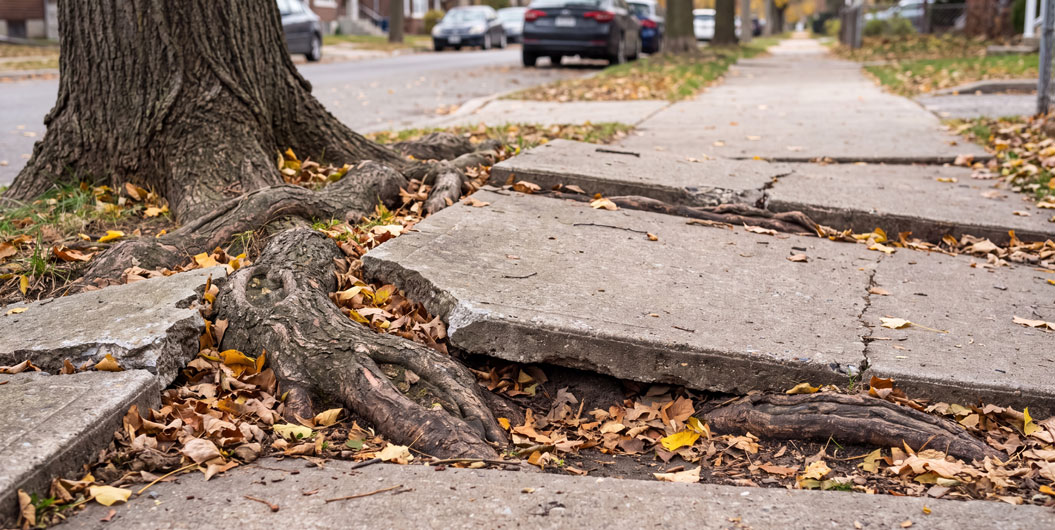
1. Cracked or Lifting Sidewalks and Driveways
One of the most visible signs of potential root-related damage is concrete that begins to crack, lift, or shift near a mature tree.
You may notice:
- Sidewalk panels becoming uneven or raised.
- Cracks forming or widening in your driveway.
- Concrete lifting near the base of a tree.
- Gaps developing between adjoining concrete sections.
As roots grow beneath pavement, their increasing diameter can cause the surface above them to lift or separate. This is especially common when large trees grow in narrow planting strips or areas with limited space for root development.
While tree roots can contribute to these problems, poor soil preparation, settling, and other factors can also affect concrete.
Before replacing damaged pavement, it’s worth determining whether nearby roots are contributing to the problem. Otherwise, the same issue may return.
2. Cracks or Movement Around Your Home’s Foundation
Large trees growing near a home sometimes raise concerns about foundation damage.
Although tree roots can affect surrounding soil conditions, they do not automatically damage a foundation simply because they are growing nearby.
In certain soil conditions, trees can contribute to changes in soil moisture that may influence ground movement. Other factors, including expansive soils, drainage problems, and natural settling, can also cause foundation movement.
Possible warning signs include:
- New or widening cracks near the foundation.
- Changes in gaps around doors or windows.
- Uneven or settling soil near the home.
- Visible changes in the ground surrounding nearby trees.
If you suspect foundation damage, a qualified structural engineer or foundation specialist should evaluate the structure.
An ISA Certified Arborist can assess the nearby trees, their growing conditions, and visible root-related concerns to help determine whether additional tree management may be appropriate.
3. Uneven Patios, Walkways, or Pool Decks
Tree roots don’t just affect sidewalks and driveways. They can also interfere with patios, pool decks, walkways, and other hardscape features.
As roots develop beneath these surfaces, they may gradually displace pavers or lift sections of concrete.
Common signs include:
- Patio slabs becoming uneven.
- Pavers shifting out of position.
- Raised sections around pool decks.
- Walkways developing trip hazards.
These changes may occur gradually, making them easy to overlook until the uneven surface becomes noticeable.
If roots are contributing to the problem, simply removing them may not be the best solution. Larger roots can play an important role in supporting the tree, and cutting them improperly can affect its stability and health.
In some situations, modifying the surrounding hardscape may be a better option than removing significant roots.
4. Recurring Sewer or Drainage Problems
Tree roots naturally grow through soil where moisture, oxygen, and nutrients are available. Underground sewer and drainage systems can sometimes create favorable conditions for root growth.
When pipes have cracks, deteriorated joints, or other openings, small roots may enter and continue growing inside. Over time, this growth can restrict water flow and contribute to blockages.
Potential warning signs include:
- Frequent sewer-line backups.
- Multiple drains running slowly.
- Recurring blockages after plumbing repairs.
- Unexplained wet areas in the yard.
- Repeated problems with underground drainage lines.
These symptoms can have several causes, so it’s important not to assume tree roots are responsible.
A licensed plumber can inspect the affected line, often using a sewer camera, to identify blockages or root intrusion.
If roots are found, an arborist can evaluate nearby trees and discuss whether any tree-related management is appropriate.
5. Exposed Roots or Changes in the Surrounding Soil
Visible tree roots are not necessarily a sign of trouble.
Many mature trees develop surface roots, particularly where soil is shallow, compacted, or conditions favor growth near the surface.
However, changes in the soil around a tree may indicate that roots are affecting nearby landscaping.
Watch for:
- Raised areas or ridges in the soil.
- Roots becoming newly exposed.
- Landscape borders or edging being displaced.
- Soil shifting around established trees.
- Irrigation components being pushed out of position.
Some of these changes result from normal root growth, while others may be related to soil erosion, grading, or other landscape conditions.
Avoid cutting or removing exposed roots without professional guidance. Their size, location, and function are important considerations when determining whether root pruning is appropriate.
6. A Tree That Develops a Sudden Lean
While many trees naturally grow at an angle, a tree that suddenly begins leaning may indicate a problem with its root system or surrounding soil.
Roots play an essential role in anchoring a tree. When major roots are damaged, decayed, or lose support from the surrounding soil, the tree’s stability may be affected.
Warning signs include:
- A tree developing a new or noticeably increasing lean.
- Soil cracking or lifting around the trunk.
- Roots pulling upward from the ground.
- Visible movement of the root plate at the tree’s base.
These conditions can become especially concerning following heavy rain, strong winds, excavation, or other soil disturbances.
A sudden lean accompanied by lifted roots or disturbed soil may indicate a significant safety concern.
Keep people and vehicles away from the affected area and arrange for a prompt professional evaluation.
7. Repeated Damage to Landscaping or Irrigation
Have you repaired the same section of landscaping more than once, only to see the damage return?
Ongoing root growth can sometimes interfere with landscape features, particularly where mature trees share limited space with irrigation systems, edging, and hardscape materials.
You may notice:
- Landscape edging repeatedly lifting.
- Pavers shifting after being reset.
- Irrigation lines becoming displaced or damaged.
- Soil or decorative landscape materials being pushed out of place.
- Repairs failing in the same location.
These issues don’t necessarily mean the tree needs to be removed.
Depending on the situation, adjusting the landscaping, relocating irrigation components, or modifying nearby hardscape may provide a longer-term solution.
An arborist can help evaluate the tree and determine whether root management should be considered.
When Should You Have an Arborist Evaluate Tree Root Damage?
If you’ve noticed signs of possible tree root damage, evaluation with an ISA Certified Arborist before beginning repairs can help prevent unnecessary work and additional problems.
At Tree Barber Enterprises, our ISA Certified Arborists consider factors such as:
- Tree species and overall health.
- Visible root growth and surrounding soil conditions.
- Distance between the tree and nearby structures.
- Evidence of root damage or disturbance.
- Potential effects of root pruning on tree health and stability.
Depending on the circumstances, recommendations may include monitoring the tree, selective root management, adjustments to nearby landscaping, or coordination with other qualified professionals.
It’s important to remember that cutting large roots can affect a tree’s stability, health, and ability to absorb water and nutrients. Root pruning should be carefully evaluated rather than treated as a routine solution.
In some cases, property concerns can be addressed while preserving the tree. In others, more extensive work may be necessary.
The goal is to identify the problem and determine an appropriate course of action.
Frequently Asked Questions About Tree Root Damage
Can tree roots damage a home’s foundation?
Tree roots can contribute to conditions that affect foundations, particularly where soil moisture changes lead to ground movement. However, foundation cracks can also result from settling, expansive soils, drainage issues, or structural problems. A structural engineer or qualified foundation specialist should evaluate suspected foundation damage.
Should I cut tree roots growing near my driveway?
Not without professional guidance. Cutting major roots can affect a tree’s health and structural stability. An ISA Certified Arborist can evaluate the visible roots and surrounding conditions before root pruning is considered.
How do I know if tree roots are inside my sewer line?
Recurring sewer backups, slow drainage, and repeated blockages may indicate root intrusion. A licensed plumber can use a sewer camera to inspect the line and determine whether roots or another obstruction are present.
Can a tree be saved if its roots are damaging my property?
In many cases, yes. Depending on the tree species, root location, and extent of damage, possible solutions may include modifying nearby hardscape, selective root management, or other landscape adjustments. However, preservation is not always practical or safe.
Who should inspect suspected tree root damage?
An ISA Certified Arborist can evaluate the tree, visible roots, and surrounding growing conditions. A licensed plumber, structural engineer, or other qualified specialist may also be needed to determine the cause and extent of damage to pipes or structures.
Protect Your Property While Keeping Your Trees Healthy
Mature trees provide shade, beauty, and value to North County San Diego properties. However, as their root systems grow, conflicts with nearby sidewalks, driveways, plumbing, and landscaping can develop.
Recognizing potential problems early can help you make informed decisions about tree care and property maintenance.
Serving North County San Diego since 1983, Tree Barber Enterprises provides professional tree care and ISA Certified Arborist consultations for homeowners throughout Escondido, San Marcos, Vista, Carlsbad, Encinitas, Oceanside, Poway, Rancho Bernardo, and surrounding communities.
If you’re concerned about tree roots affecting your property, contact Tree Barber to schedule an arborist consultation.
If you’re concerned that tree roots may be affecting your driveway, foundation, plumbing, or landscaping, schedule an arborist consultation with Tree Barber for a professional evaluation.